Debt Consolidation Loans in California — One Payment, Lower Rate

California carries some of the highest consumer debt burdens in the United States. The average California household holds over $107,000 in total debt — including mortgages, auto loans, student loans, and credit cards. For the millions of Californians carrying multiple high-interest credit card balances, a debt consolidation loan offers a clear path to financial simplification: one fixed monthly payment, a lower interest rate, and a defined payoff date. Fast Loans California connects you with CFL-licensed California lenders offering debt consolidation loans from $5,000 to $50,000.

No Hard Credit Pull
Funds in 24 Hours
Free to Use

How Much Do You Need?

No hard credit pull · Takes 2 minutes

$5,000
$1,000 $50,000

FastLoansCalifornia.com is not a lender. We connect California residents with licensed lenders. APR varies by lender and credit profile. See lender terms. California Finance Law applies.

What Is a Debt Consolidation Loan in California?

A debt consolidation loan is a personal loan used to pay off multiple existing debts — most commonly credit card balances — replacing them with a single installment loan at a fixed APR. In California, these loans are governed by the California Financing Law (CFL) and must be offered by DFPI-licensed lenders. The strategic value of debt consolidation is rate arbitrage: if your credit cards carry 22–28% APR and you qualify for a consolidation loan at 12–16% APR, you reduce your interest cost substantially while simplifying your monthly financial management.

How Debt Consolidation Works: You apply for a personal loan equal to the total amount of debt you want to consolidate. If approved, the lender either pays your creditors directly or deposits funds into your bank account for you to pay off each balance. Going forward, you make one fixed monthly payment to the consolidation lender, and your credit card balances are zero — assuming you don't continue using them.

Debt Consolidation Personal Loan

  • Fixed APR: typically 8%–24%
  • Fixed monthly payment
  • Set payoff date (24–84 months)
  • No collateral required (unsecured)
  • One payment per month
  • Reports to credit bureaus (builds history)

Credit Card Balance Transfer

  • Intro APR: 0% for 12–21 months (then 20–29%)
  • Balance transfer fee: 3%–5%
  • Requires good credit (670+) for best offers
  • Risk of rate spike after intro period
  • Requires discipline not to re-spend
  • Variable minimum payments
OptionBest APRCollateralLoan LimitsBest For
Debt Consolidation Loan 8%–24% None (unsecured) $5,000–$50,000 Large debt loads, predictable payments
Balance Transfer Card 0% intro None Card limit (varies) Good credit, smaller debt ($5k–$15k)
HELOC Prime + 1%–2% Home equity $10,000–$500,000+ Homeowners with equity, lowest rates
401(k) Loan Prime rate Retirement account 50% of balance up to $50k Emergency only — opportunity cost risk
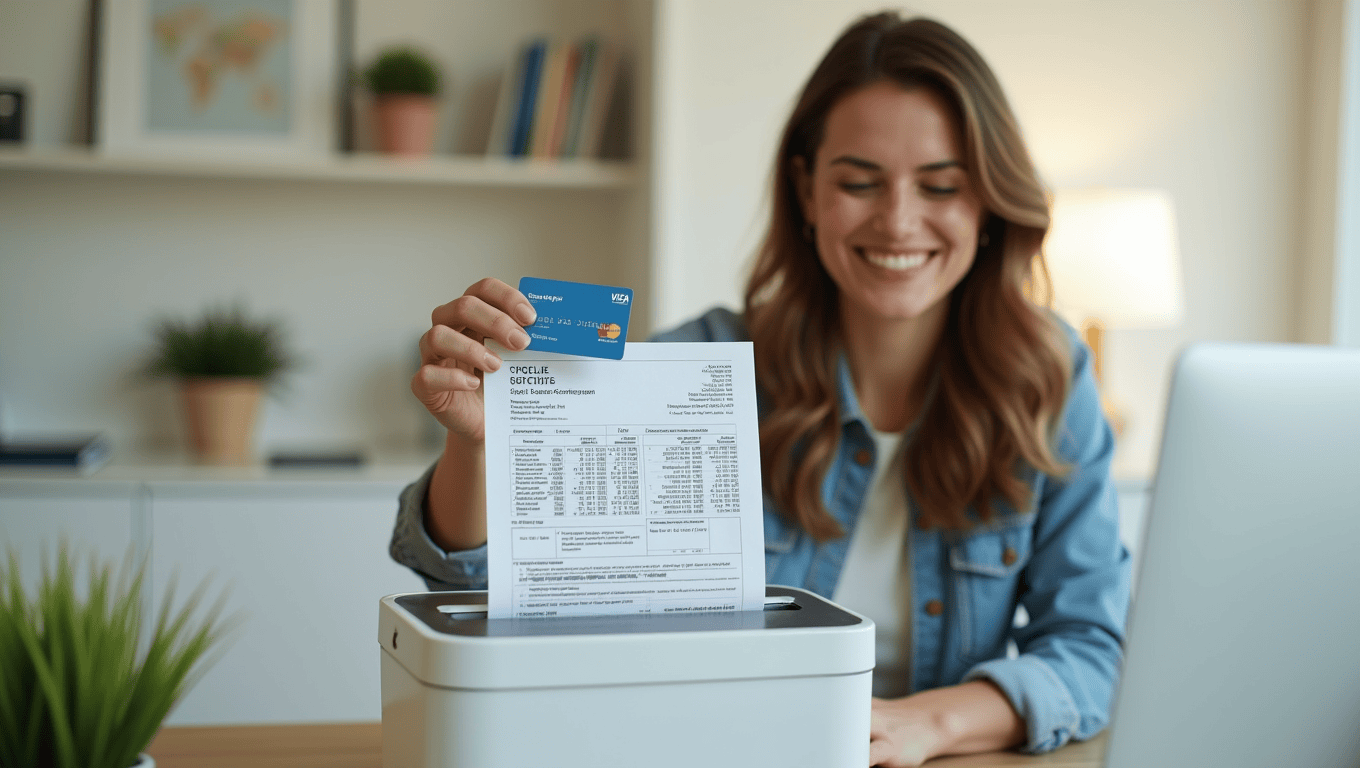
California woman shredding old credit cards after consolidating debt into one loan

How to Get a Debt Consolidation Loan in California

  1. 1 Calculate your total debt — List all balances, current APRs, and minimum payments. Total the amounts to determine the loan size you need. Include only high-interest debt — do not consolidate student loans or low-rate auto loans with a personal loan.
  2. 2 Check your credit score — Debt consolidation loans offer the best rates to borrowers with 660+ FICO. If your score is below 620, you may still qualify but should check whether the rate improvement justifies the consolidation.
  3. 3 Compare licensed CA lenders — Request offers through Fast Loans California. Compare APR, origination fee, monthly payment, total interest paid, and term length. Calculate the total loan cost vs. your current minimum payment trajectory.
  4. 4 Apply and manage your cards — After funding, pay off each card balance immediately. Consider setting cards to zero-balance and not closing accounts (closure can hurt credit utilization and average account age).

How Much Can You Save With Debt Consolidation?

The savings potential of debt consolidation in California depends on the rate differential between your current debt and the consolidation loan. Here is a concrete example using typical California credit card rates vs. a consolidation loan.

Monthly minimum ~$375; payoff in 10+ years; total interest $13,000+
Scenario: $15,000 total credit card debt at 24% APR
Monthly payment: $395; payoff in exactly 4 years; total interest ~$3,960
After consolidation at 12% APR, 48-month term
~$9,000+ over life of debt
Total interest savings
21.5%–27% (varies by card)
California avg credit card APR

Important: Debt consolidation only saves money if you (a) qualify for a lower APR than your current blended credit card rate and (b) do not accumulate new credit card debt after consolidation. Use our loan calculator to model your specific scenario before applying.

California couple celebrating paying off their last credit card balance together

Debt Consolidation Loan Requirements in California

California lenders evaluate debt consolidation applicants on several factors. Because larger loan amounts are common for consolidation purposes, qualification standards may be slightly higher than for small personal loans.

RequirementFor Best RatesMinimum to Qualify
Credit Score 700+ 620 (some lenders 580)
Debt-to-Income Ratio Below 35% Below 50%
Annual Income $40,000+ $24,000+ (varies by loan size)
Employment 2+ years same employer 6+ months stable employment
Credit History 3+ years, no recent collections Some lenders accept collections
CA Residency Required Required

California Debt Laws — What Borrowers Should Know

California's Rosenthal Fair Debt Collection Practices Act (RFDCPA) extends federal debt collection protections to California borrowers. While federally the FDCPA applies only to third-party collectors, California's RFDCPA applies to original creditors as well — giving California borrowers stronger protection against harassment and abusive collection practices than borrowers in most other states.

Rosenthal Fair Debt Collection Practices Act (RFDCPA)

Legislation

California's state debt collection law, which extends FDCPA protections to original creditors (not just third-party collectors). Prohibits harassment, false representation, and unfair collection practices by any debt collector operating in California.

  • California statute of limitations on credit card debt: 4 years (from last payment date)
  • RFDCPA prohibits harassment calls, false statements, and unfair collection practices
  • AB 539 caps interest at 36% APR for consolidation loans between $2,500 and $10,000
  • CFL-licensed lenders must provide full APR disclosure before loan agreement
  • California borrowers have a 3-day right of rescission on certain loan types

Check Your Debt Consolidation Loan Rate in California

See what rate you qualify for on a California debt consolidation loan — no hard credit pull, no commitment. Compare offers from CFL-licensed lenders and calculate your potential monthly savings.

Get Pre-Approved Now

Frequently Asked Questions

What is the best debt consolidation loan in California? +
The best debt consolidation loan in California is the one with the lowest APR you qualify for, sufficient loan amount to cover all your target debt, and a monthly payment you can comfortably afford. Compare offers from multiple CFL-licensed California lenders through Fast Loans California — lenders typically offer rates from 8% to 24% APR depending on credit score and income.
What credit score do I need to consolidate debt in California? +
Most California debt consolidation lenders prefer a credit score of 620 or higher. For the best rates (under 12% APR), you typically need 700+. Some bad credit lenders may approve consolidation loans for scores as low as 580, but at rates up to 36% — which may still beat your existing credit card APR.
How much can I borrow for debt consolidation in California? +
California debt consolidation loans through our lender network range from $5,000 to $50,000. The maximum you qualify for depends on your income, credit score, and debt-to-income ratio. Most lenders cap at 50% DTI after the new loan payment is included.
Will a debt consolidation loan hurt my credit score? +
Applying for a debt consolidation loan results in a hard credit inquiry, which may temporarily lower your score by 3–5 points. However, consolidating credit card debt can significantly reduce your credit utilization ratio — which is 30% of your FICO score — potentially improving your score within 1–2 billing cycles after paying off card balances.
How long does debt consolidation take in California? +
The application process through Fast Loans California takes 10–20 minutes. Approval decisions from online lenders typically come within minutes to hours. Funding occurs within 1–2 business days. Paying off your credit card balances is immediate after funds are deposited. Full debt payoff through the consolidation loan depends on the loan term — typically 24 to 84 months.
Is debt consolidation worth it in California? +
Debt consolidation is worth it in California if you can qualify for a loan with a lower APR than your current blended credit card rate and you commit to not accumulating new card debt. For example, consolidating $15,000 at 24% APR credit card debt into a 12% APR personal loan over 48 months can save over $9,000 in interest — a compelling financial case.
Loan Calculator

Estimate Your Monthly Payment

Adjust the sliders to see an instant estimate. Actual rates depend on your credit profile.

$10,000
$1,000$50,000
12%
5%36%
36 mo
6 mo60 mo

* Estimate only. Actual rate and terms depend on lender approval.

Estimated Monthly Payment

$332.14

per month for 36 months

Loan Breakdown

Principal (Loan Amount)$10,000
Total Interest Paid$1,957
Total Cost of Loan$11,957

No impact on your credit score

Related Pages